
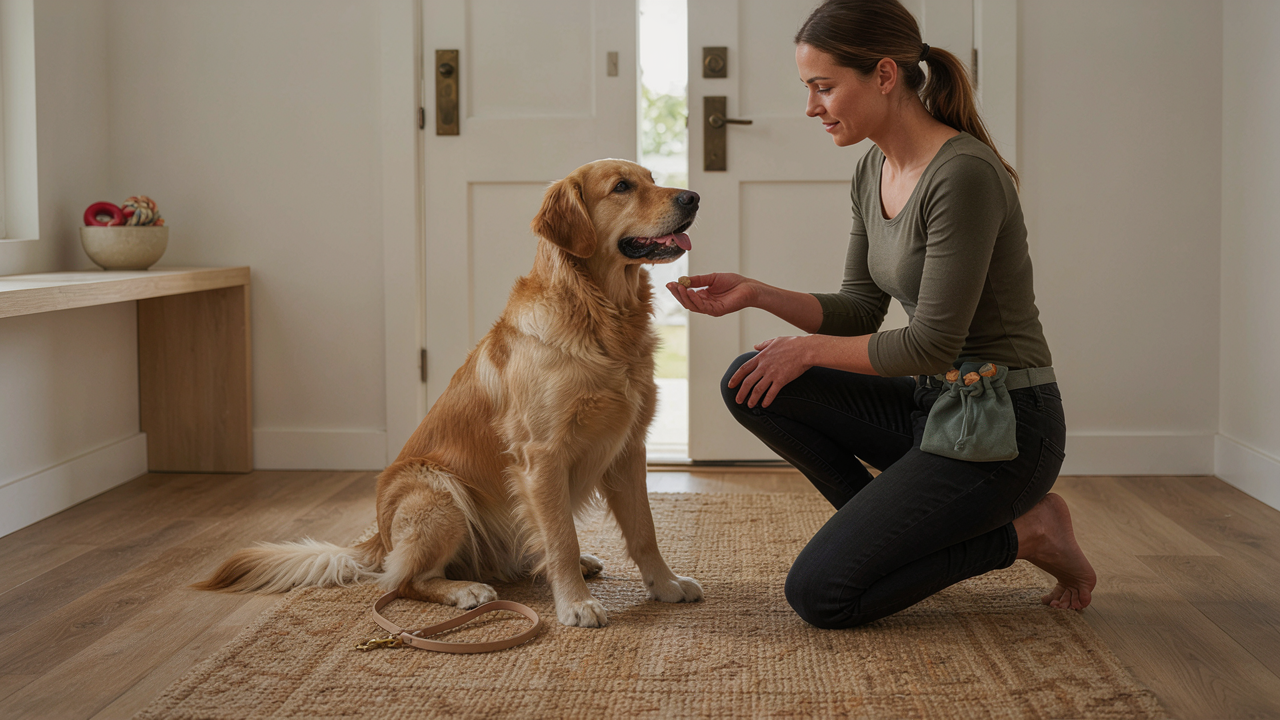
Off-leash freedom can give dogs more opportunities to exercise, play, and experience their surroundings. However, freedom should come after reliable obedience, not before it. Off-leash training Phoenix dog owners seek should focus on recall, impulse control, attention, and the ability to respond even when distractions compete for a dog’s attention.
A dog that comes when called in the living room may behave very differently when another dog, person, animal, or exciting scent appears. As Rob’s Dog Training emphasizes through its training programs, effective off-leash obedience is built through structured practice, consistent communication, and gradual exposure to real-world situations.
Why Off-Leash Training Requires More Than “Come”
Recall is one of the most important skills for off-leash reliability, but it is only one part of the picture.
A dog needs to understand that responding to its handler remains important even when something more exciting is happening nearby. This requires a foundation of basic obedience and an understanding of how to maintain attention under increasing levels of distraction.
Important skills include:
- Reliable recall from different distances
- Sit, down, and stay
- Impulse control around distractions
- Loose-leash walking before progressing to greater freedom
- Attention and engagement with the handler
- Calm responses around people and other dogs
- Ability to follow direction in unfamiliar environments
These behaviors work together. A dog that has a strong recall but routinely ignores other commands may still struggle when faced with an unexpected distraction.
Off-Leash Training Phoenix Dogs Can Use in Real Life
Training should not stop once a dog performs a command in a quiet room. Dogs need opportunities to practice skills in increasingly challenging environments.
For example, recall can begin in a controlled space with minimal distractions. Once the dog responds consistently, the difficulty can gradually increase through greater distance, new surroundings, movement, sounds, and other distractions.
This progression matters because dogs do not automatically generalize a behavior from one environment to another. A response that is reliable at home may need additional practice before it becomes dependable outdoors.
A practical progression may look like this:
- Build the behavior in a controlled environment.
Start with simple recall and obedience exercises where the dog can succeed. - Introduce mild distractions.
Practice while toys, household activity, or other manageable distractions are present. - Increase distance.
Give the dog opportunities to respond when farther away from the handler. - Practice in new environments.
Gradually introduce locations with different sights, sounds, surfaces, and smells. - Increase distractions carefully.
Work toward situations involving people, dogs, movement, and other competing stimuli. - Maintain the behavior consistently.
Continued reinforcement helps prevent skills from becoming inconsistent over time.
The goal is not simply to make a dog obey in one training session. The goal is to build behaviors that remain useful in everyday situations.
Recall Training Is the Foundation of Off-Leash Freedom
A dependable recall can be especially important when a dog becomes separated from its owner or encounters an unexpected situation. For that reason, “come” should mean more than casually returning when nothing else is happening.
Good recall training teaches the dog to disengage from an activity and return to the handler. That can be challenging when a dog is following a scent, watching another animal, greeting someone, or investigating an unfamiliar environment.
Owners should also avoid repeatedly calling a dog when they know the dog is unlikely to respond. Repetition without follow-through can weaken the significance of the cue.
Instead, training should focus on creating a clear association between responding to the handler and receiving appropriate reinforcement or access to something valuable.
Impulse Control Makes Off-Leash Obedience Stronger
Impulse control is another critical piece of off-leash reliability. Dogs naturally notice movement, smells, sounds, animals, food, and other environmental changes.
Training helps them learn that noticing something does not always mean immediately chasing, greeting, or reacting to it.
Impulse control can be practiced through everyday obedience exercises such as waiting before going through a doorway, remaining in position while distractions occur, or disengaging from something interesting when directed.
This is particularly useful outdoors. A dog that can pause and look to its handler before reacting is easier to manage than a dog that immediately follows every interesting stimulus.
Why Distractions Should Be Part of Training
A common mistake is judging a dog’s training based only on performance in a low-distraction environment.
Real life is rarely quiet.
Phoenix dogs may encounter other pets, cyclists, pedestrians, vehicles, unfamiliar sounds, wildlife, and changing surroundings. Training therefore needs to account for the difference between knowing a command and responding to it when something else has captured the dog’s attention.
A useful approach is to increase difficulty gradually rather than expecting immediate reliability in the most distracting environment possible.
If a dog struggles, the solution is not necessarily to keep increasing pressure. Returning to a simpler environment and rebuilding the behavior can help establish a stronger foundation.
Professional Training Can Help Owners Build Consistency
One of the most overlooked parts of dog training is the owner’s role. Dogs may respond differently to different people when timing, communication, expectations, and follow-through are inconsistent.
Professional instruction can help owners understand what to practice, how to communicate clearly, and how to maintain behaviors between sessions.
Training programs can also be structured around the individual dog. Factors such as temperament, energy level, confidence, existing behaviors, and the owner’s goals can influence the appropriate approach. The current training model at Rob’s Dog Training includes both Board & Train and Private Lessons, with private instruction customized around the dog’s needs and the owner’s goals.
That individualization matters because there is no single training timeline that works for every dog.
When Is a Dog Ready for Off-Leash Practice?
There is no universal age or obedience milestone that automatically makes every dog ready for unrestricted off-leash activity.
Readiness should be evaluated based on behavior and reliability.
Before considering greater freedom, owners should look for signs such as:
- Consistent response to recall cues
- Ability to maintain attention around manageable distractions
- Reliable basic obedience
- Appropriate behavior around people and dogs
- Ability to disengage from distractions
- Calm responses when excited
- Consistent handler communication
- Reliable performance in multiple environments
Even a well-trained dog may not be appropriate for every off-leash location. Public rules, environmental hazards, traffic, wildlife, other animals, and the dog’s individual behavior should always be considered.
Off-leash reliability does not mean a dog should be allowed to run freely everywhere.
Safety Should Remain the Priority
Training gives owners better communication and control, but it does not remove environmental risks.
Before allowing a dog off leash, consider the setting carefully. Secure, permitted areas can provide a safer place to practice than locations with traffic, steep drop-offs, unfamiliar animals, or other hazards.
A long training line can also provide an intermediate step between a standard leash and complete freedom. It gives the dog room to practice recall while allowing the handler to maintain physical control when necessary.
Most importantly, owners should avoid treating one successful session as proof that a dog is ready for unrestricted freedom.
Reliability develops through repetition.
Building Skills That Last Beyond the Training Session
Off-leash obedience is not about teaching a dog to follow commands only when a trainer is present. The strongest results come when owners understand how to continue the training in everyday life.
That means practicing short sessions, reinforcing desired behavior, maintaining clear expectations, and gradually introducing appropriate distractions.
The same principle applies to dogs completing structured programs. The owner must understand how to maintain the behaviors after training ends. Board & Train programs, for example, include instruction intended to help owners continue reinforcing training at home.
Consistency turns individual training sessions into practical habits.
Take the Next Step Toward Reliable Off-Leash Behavior
Off-leash freedom should be earned through communication, obedience, recall, impulse control, and consistent practice. When dogs learn to respond to their handlers despite distractions, they are better prepared to handle real-world situations with greater confidence and reliability.
If you’re looking for off-leash training Phoenix dog owners can trust, Rob’s Dog Training offers Board & Train and Private Lessons designed to build reliable obedience and strengthen the relationship between dogs and their owners. Visit robsdogs.com to learn more about the available training programs and take the next step toward safer, more dependable off-leash behavior.