
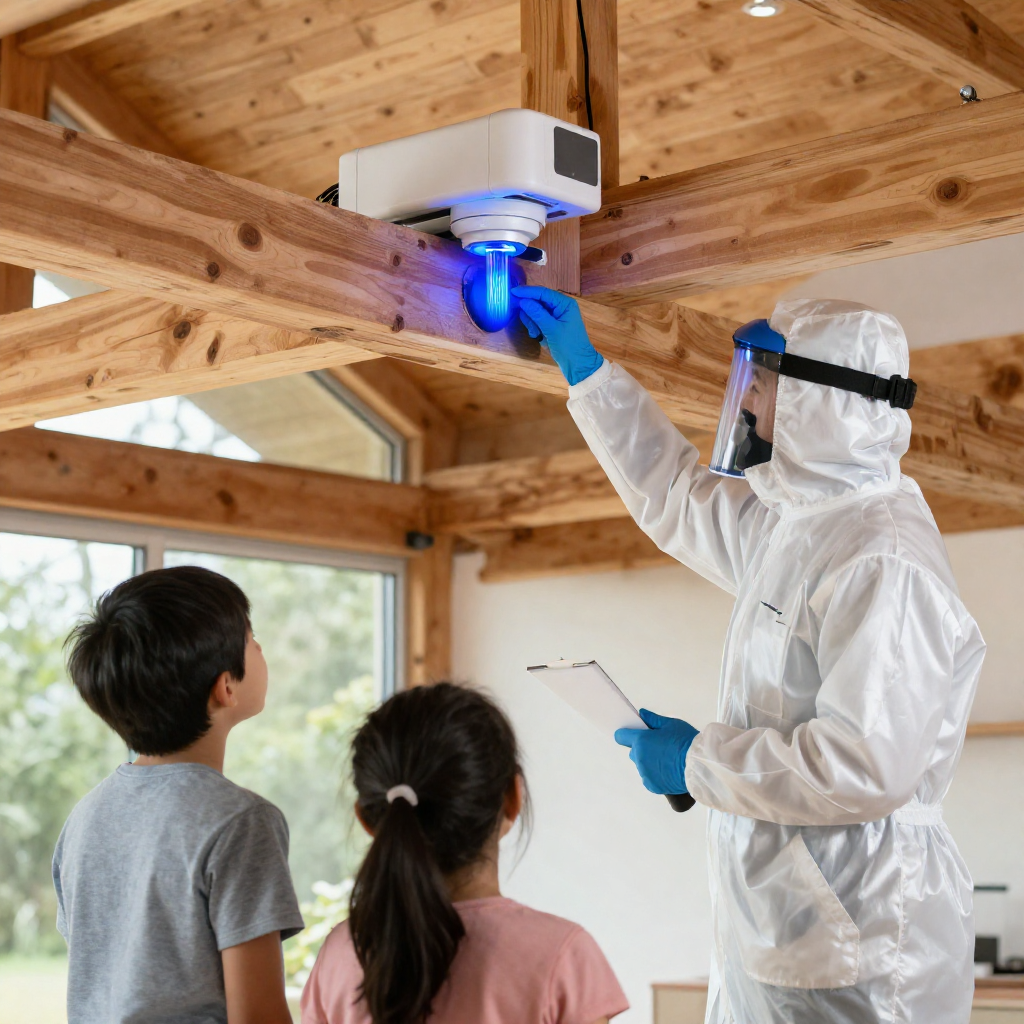
As homeowners, businesses, and conservation professionals become increasingly conscious of health, sustainability, and environmental responsibility, chemical-free pest control has emerged as one of the fastest-growing trends in the pest management industry. While traditional pest control methods have relied heavily on chemical insecticides for decades, many people are now looking for safer alternatives that effectively eliminate pests without leaving harmful residues.
One of the leading innovations in this field is microwave pest treatment, a modern technology that uses controlled heat instead of chemicals to eliminate woodworm and other wood-boring insects hidden inside timber. Alongside other non-chemical methods, it reflects a broader shift toward sustainable pest management that protects both people and the environment.
In this article, we’ll explore why chemical-free pest control is becoming increasingly popular, how it compares with traditional treatments, and what benefits it offers for homeowners, businesses, and historic properties.
What Is Chemical-Free Pest Control?
Chemical-free pest control refers to treatment methods that eliminate or manage pests without relying on synthetic pesticides or insecticides.
Instead of poisoning insects, these methods may use:
- Controlled heat
- Physical removal
- Environmental management
- Moisture control
- Exclusion techniques
- Monitoring and early detection
For woodworm infestations, one of the most advanced chemical-free options is microwave woodworm treatment, which uses dielectric heating to eliminate insects hidden inside timber.
Why Homeowners Are Choosing Chemical-Free Solutions
Many homeowners want effective pest control while reducing unnecessary chemical exposure inside their homes.
Chemical-free treatments appeal to people who:
- Prefer environmentally responsible solutions.
- Have young children.
- Own pets.
- Are sensitive to strong odors.
- Want to minimize pesticide use indoors.
Although professional chemical treatments remain effective and appropriate in many situations, increasing awareness of alternative technologies has expanded the range of available options.
1. Reduced Chemical Exposure
One of the biggest reasons for the growing popularity of chemical-free pest control is the desire to reduce unnecessary contact with pesticides.
Heat-based treatments, such as microwave woodworm treatment, do not rely on insecticides and therefore leave no pesticide residue on treated timber.
This can be particularly attractive in:
- Family homes
- Schools
- Healthcare facilities
- Museums
- Historic buildings
2. Environmentally Friendly
Environmental sustainability has become an important consideration for many property owners.
Chemical-free treatments help reduce:
- Chemical runoff
- Environmental contamination
- Indoor chemical residues
- Dependence on synthetic pesticides
By using physical methods such as controlled heat, these treatments often have a lower environmental impact.
3. Growing Demand for Sustainable Building Maintenance
Many homeowners now focus on preserving existing materials rather than replacing them unnecessarily.
Chemical-free technologies support sustainable property maintenance by:
- Preserving original timber.
- Reducing construction waste.
- Extending the life of wooden structures.
- Supporting heritage conservation.
This approach aligns with broader sustainability goals in modern construction and property management.
4. Effective Against Hidden Woodworm
Woodworm larvae spend most of their lives deep inside timber.
Microwave treatment generates heat within the wood itself, helping target insects hidden beneath the surface without relying on chemical penetration.
This makes it particularly suitable for localized infestations in:
- Roof beams
- Floor joists
- Furniture
- Timber framing
- Staircases
5. No Lingering Chemical Odors
Traditional chemical treatments may produce noticeable odors during or shortly after application.
Chemical-free heat treatments avoid this because no pesticides are sprayed onto the timber.
This can improve comfort during the treatment process and reduce concerns about chemical smells in living spaces.
6. Suitable for Heritage Buildings
Historic buildings often contain irreplaceable timber that conservation professionals wish to preserve.
Chemical-free treatment methods are frequently considered because they:
- Avoid pesticide residues.
- Minimize intervention.
- Help preserve original building materials.
- Support conservation objectives.
Every heritage property should still be individually assessed before treatment.
7. Advances in Modern Technology
Technological improvements have made chemical-free pest control more practical than ever.
Professional microwave systems now offer:
- Precise temperature control.
- Targeted heating.
- Improved treatment accuracy.
- Portable equipment for on-site applications.
- Enhanced safety features.
These innovations have increased confidence in non-chemical treatment methods.
How Microwave Pest Control Works
Microwave treatment uses controlled electromagnetic energy to generate heat inside timber.
The process works by interacting with water molecules naturally present within the wood.
As these molecules rapidly vibrate, they generate heat through dielectric heating.
When the timber reaches temperatures of approximately 55–60°C (131–140°F), the heat is intended to eliminate:
- Woodworm larvae
- Beetle eggs
- Pupae
- Adult wood-boring beetles
Because no pesticides are involved, microwave treatment leaves no chemical residue behind.
Chemical-Free vs. Traditional Chemical Treatments
| Feature | Chemical-Free Microwave Treatment | Traditional Chemical Treatment |
|---|---|---|
| Uses Chemicals | No | Yes |
| Leaves Chemical Residue | No | Yes |
| Uses Heat | Yes | No |
| Environmental Impact | Lower | Moderate |
| Suitable for Heritage Timber | Often | Depends on the product |
| Indoor Chemical Odors | None | Sometimes |
Both approaches can be effective, and the most appropriate treatment depends on the property, infestation, and professional assessment.
Are Chemical-Free Treatments Always the Best Choice?
Not necessarily.
Although chemical-free treatments offer many advantages, they are not suitable for every situation.
Factors influencing treatment selection include:
- Extent of infestation
- Accessibility of the timber
- Building construction
- Moisture levels
- Structural condition
- Conservation requirements
In some cases, professional pest controllers may recommend chemical treatments, heat treatments, or a combination of methods depending on the specific circumstances.
Preventing Future Woodworm Problems
Regardless of the treatment method chosen, prevention remains essential.
Protect timber by:
- Repairing roof leaks promptly.
- Improving ventilation.
- Reducing indoor humidity.
- Keeping structural timber dry.
- Inspecting roof spaces annually.
- Monitoring furniture for fresh frass and exit holes.
- Addressing damp conditions early.
Healthy timber is naturally less attractive to wood-boring beetles.
Common Myths About Chemical-Free Pest Control
Myth 1: Chemical-Free Means Less Effective
Fact: Many chemical-free treatments, including professional microwave woodworm treatment, can be highly effective when applied correctly to suitable infestations.
Myth 2: Heat Treatments Damage Timber
Fact: Professional systems carefully control temperature to eliminate insects while minimizing the risk of damage to sound timber.
Myth 3: Chemical Treatments Are Outdated
Fact: Chemical treatments continue to play an important role in pest management. The most appropriate method depends on the property and the nature of the infestation.
When Should You Contact a Professional?
Professional advice is recommended if:
- Fresh frass continues appearing.
- New exit holes develop.
- Structural timber is affected.
- Valuable furniture requires treatment.
- You prefer a chemical-free solution.
- You’re unsure which treatment method is most appropriate.
A qualified timber preservation specialist can inspect your property, identify the extent of the infestation, and recommend the safest and most effective treatment option.Visit online https://www.shashel.eu for more details .
Conclusion
The growing popularity of chemical-free pest control reflects increasing awareness of sustainability, indoor environmental quality, and modern treatment technologies. Methods such as microwave woodworm treatment offer an effective way to eliminate wood-boring insects without relying on synthetic pesticides, making them an attractive option for homeowners, conservation professionals, and environmentally conscious property owners.
While chemical treatments remain valuable in many situations, chemical-free alternatives continue to expand the choices available for protecting timber. With professional assessment, early detection, moisture control, and regular maintenance, homeowners can select the treatment approach that best suits their property while helping preserve both their timber and the environment.