
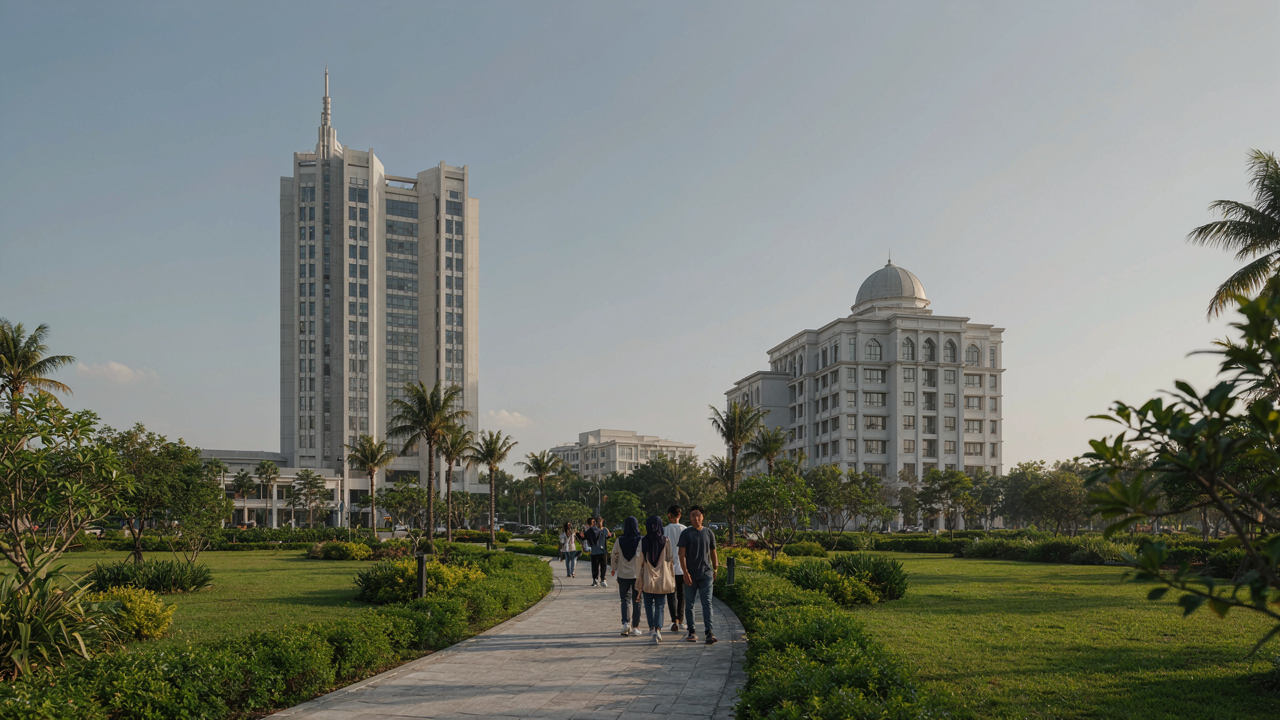
Modern education is not only about gaining academic knowledge and professional skills. It also plays an important role in developing responsible individuals with strong ethical values, critical thinking abilities, and a positive attitude towards society. Universities are increasingly expected to prepare students for professional careers while helping them understand their responsibilities as members of their communities.
Sultan Agung Islamic University (UNISSULA), located in Semarang, Indonesia, follows an educational approach that connects modern academic knowledge with Islamic principles. The university aims to develop students who are knowledgeable, professionally skilled, morally responsible, and prepared to contribute to society.
Through its Islamic Academic Culture, academic programmes, research activities, community services, and campus environment, unissula works to bring religious values and modern education together.
What Is UNISSULA’s Educational Philosophy?
UNISSULA’s educational philosophy is based on developing a generation known as Khaira Ummah. This Arabic expression refers to the best or exemplary community, which is associated with good character, knowledge, responsibility, and positive contributions to society.
The university’s vision is to become an excellent Islamic university that develops science and technology to build a Khaira Ummah generation with international competitiveness through Islamic Academic Culture.
This vision shows that UNISSULA does not consider religious education and modern academic learning to be separate areas. Instead, it aims to connect them in a way that supports students’ intellectual, spiritual, and professional development.
For example, a student studying medicine needs scientific knowledge and clinical skills, but also needs honesty, compassion, and responsibility when treating patients. Similarly, an engineering student needs technical knowledge while understanding the importance of safety, ethical decisions, and the impact of technology on society.
This approach allows students to consider both the technical and ethical aspects of their future professions.
What Is Islamic Academic Culture (BudAI)?
Islamic Academic Culture, commonly known as BudAI, is an important part of UNISSULA’s educational approach. It provides a framework for bringing Islamic values into academic activities and everyday campus life.
UNISSULA declared BudAI on August 18, 2005, as part of its effort to develop an educational environment based on Islamic principles.
The idea is to create a university culture in which academic achievement is supported by good character, discipline, honesty, responsibility, and religious awareness.
BudAI is not limited to Islamic studies classes. Its principles are intended to influence how students learn, how lecturers teach, how university members communicate, and how academic responsibilities are performed.
For example, students are encouraged to maintain honesty in examinations, avoid plagiarism in academic work, respect lecturers and classmates, and take responsibility for their assignments.
These practices connect everyday academic behaviour with broader ethical principles.
How Does UNISSULA Integrate Islamic Values into Different Academic Subjects?
One of the main ways UNISSULA combines Islamic values with modern education is by connecting ethical and religious principles with different academic disciplines.
Students study subjects related to their chosen professions while learning to consider the wider responsibilities associated with their work.
1. Medicine and Healthcare Education
Medical education requires a strong understanding of biology, anatomy, diseases, treatment methods, and modern healthcare technology. However, healthcare professionals also need compassion, patience, honesty, and respect for patients.
UNISSULA’s educational approach connects medical knowledge with Islamic values that emphasise helping others and protecting human well-being.
These principles are relevant to patient communication, professional ethics, medical decision-making, and responsible healthcare services.
2. Engineering and Technology
Engineering students learn how to design systems, develop infrastructure, solve technical problems, and use modern technology.
Islamic values can help students understand the importance of using technical knowledge responsibly. Engineers have responsibilities related to public safety, environmental protection, honesty, and the quality of their work.
By connecting professional knowledge with ethical principles, students can consider how their decisions affect individuals and communities.
3. Business and Economics
Business education involves subjects such as management, accounting, finance, marketing, and entrepreneurship.
Islamic principles provide an ethical perspective on business activities. Honesty, fairness, responsibility, and trust are important values when dealing with customers, employees, business partners, and financial resources.
This approach encourages students to understand that business success should also involve responsible decisions and positive contributions to society.
4. Law and Islamic Studies
Law and Islamic Studies provide direct opportunities to examine the relationship between religious principles, ethical responsibilities, and modern social systems.
Students can explore legal concepts, Islamic jurisprudence, justice, family responsibilities, and the role of law in society.
These subjects help students understand how religious knowledge and modern academic research can contribute to discussions about contemporary legal and social issues.
How Does UNISSULA Support Character Development?
Academic knowledge is only one part of university education. Students also need personal qualities that help them work responsibly and communicate effectively with others.
UNISSULA’s Islamic Academic Culture places importance on developing good character alongside academic abilities.
Students are encouraged to practise honesty, discipline, respect, responsibility, and cooperation. These values can influence their behaviour in classrooms, laboratories, examinations, group projects, and professional training.
Religious activities and Islamic learning also support students’ spiritual development. The university’s Islamic Studies and the Institute for the Study and Application of Islamic Values support activities related to religious learning, worship, and campus development.
The aim is to create an environment where students can develop both academically and personally.
How Does UNISSULA Use Modern Technology in Education?
Integrating Islamic values does not mean avoiding modern technology. UNISSULA’s current university vision specifically includes the development of science and technology, multidisciplinary research, digital technology, and artificial intelligence.
The university’s mission also highlights student-centred, inclusive, flexible, and adaptive learning.
Technology can support education in several ways. Digital learning platforms help students access academic materials and learning activities. Computer-based systems can support examinations and academic administration, while digital research tools help students find information and develop their academic work.
Artificial intelligence and other emerging technologies also create opportunities for research and innovation. However, students and researchers need to consider accuracy, privacy, academic honesty, and responsible use when working with these tools.
By combining technological development with ethical principles, UNISSULA aims to prepare students for a changing academic and professional environment.
What Role Do Research and Community Service Play?
UNISSULA’s educational approach also includes research and community service. These activities connect university learning with real problems and the needs of society.
Research allows students and lecturers to investigate questions, develop knowledge, test ideas, and explore possible solutions. Islamic values provide an ethical perspective on how research should be conducted and how its results may affect people.
Community service gives university members opportunities to apply their knowledge outside the classroom.
For example, healthcare students and professionals may contribute to health education activities, while education students may support learning programmes. Other academic fields can contribute through technology, business development, legal education, and social initiatives.
These activities help students understand that university education is not only about earning a qualification. It can also be used to improve communities and support social development.
How Does the Campus Environment Reflect Islamic Values?
A university’s learning environment can influence students’ habits, relationships, and personal development.
At UNISSULA, Islamic values are intended to be reflected in the wider campus environment through religious activities, learning opportunities, and everyday interactions.
The university supports activities such as congregational prayers, Quran learning, Islamic discussions, and religious guidance. Its Institute for the Study and Application of Islamic Values works to support Islamic education and religious development within the campus community.
These activities provide opportunities for students and staff to strengthen their religious understanding while participating in university life.
The campus environment also brings together students from different academic disciplines. This allows them to exchange ideas, work together, and develop communication and teamwork skills.
How Does This Approach Prepare Students for the Future?
Modern workplaces require more than technical qualifications. Employers and professional organisations also value communication, teamwork, problem-solving, adaptability, and ethical behaviour.
UNISSULA’s approach aims to develop these qualities alongside academic knowledge.
A healthcare graduate needs scientific understanding and compassion. A business graduate needs management skills and honesty. An engineer needs technical expertise and a strong sense of responsibility. An educator needs subject knowledge, patience, and respect for students.
By connecting professional education with Islamic values, the university aims to prepare graduates who can respond to these different responsibilities.
Its focus on research, technology, international cooperation, and community service also reflects the importance of preparing students for developments beyond the university environment.
Conclusion
UNISSULA combines Islamic values with modern education through its university vision, Islamic Academic Culture, academic programmes, research activities, community service, and campus environment.
Its educational approach aims to develop students who have strong academic knowledge, professional abilities, good character, and a sense of responsibility towards society.
By connecting Islamic principles with subjects such as medicine, engineering, business, law, and education, UNISSULA encourages students to consider the ethical and social impact of their future professions.
The university also recognises the importance of digital technology, artificial intelligence, research, and international development in modern education.